
What Is SEO? A Complete Guide to Search Engine Optimization
SEO (Search Engine Optimization) is the process of improving a website so that it ranks higher on search engines like Google, Bing, and Yahoo. The main focus keyword in SEO is SEO itself, as it represents the core goal of increasing visibility, organic traffic, and online credibility. In today’s digital world, SEO plays a crucial role in helping businesses, bloggers, and brands reach their target audience without relying only on paid advertisements
At its core, SEO helps search engines understand your website and decide when to show it to users. When someone searches for a product, service, or piece of information, search engines scan millions of web pages and display the most relevant and trustworthy results. SEO ensures that your website meets these criteria and appears on the first page of search results, where most users click.
SEO works through a combination of content optimization, technical improvements, and authority building. One of the most important elements of SEO is keyword research. Keywords are the words or phrases people type into search engines. By identifying and using the right keywords naturally in your content, titles, and headings, SEO helps your website match user search intent.
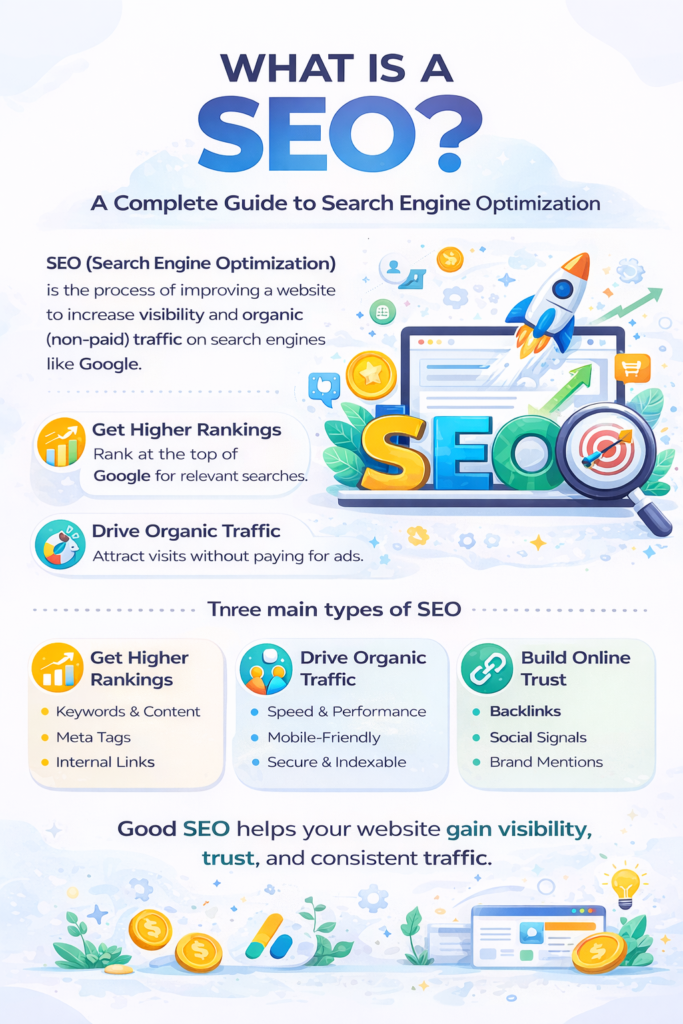
Another key aspect of SEO is on-page SEO. This includes optimizing website content, headings, meta titles, meta descriptions, image alt text, and internal linking. High-quality, informative content is the backbone of SEO because search engines prioritize websites that provide real value to users. Well-structured content improves readability and keeps visitors engaged, which positively impacts SEO rankings.
Technical SEO focuses on the backend of a website. Website speed, mobile responsiveness, secure HTTPS connections, clean URLs, and proper indexing all influence SEO performance. A technically optimized website allows search engines to crawl and index pages efficiently, ensuring your content is visible in search results.
Off-page SEO builds a website’s authority and trust. This includes earning backlinks from reputable websites, brand mentions, and online engagement. Search engines see backlinks as votes of confidence, which strengthens SEO rankings and improves domain authority.
One of the biggest advantages of SEO is that it delivers long-term results. Unlike paid ads that stop generating traffic once the budget ends, SEO continues to attract organic visitors over time. For businesses, SEO increases brand credibility, improves conversion rates, and reduces customer acquisition costs. For bloggers and content creators, SEO is essential for traffic growth, AdSense revenue, and audience building.
In conclusion, SEO is not just about ranking higher on Google—it is about creating a better online experience for users while building sustainable digital growth. When done correctly, SEO helps websites gain visibility, trust, and consistent traffic, making it one of the most powerful tools in digital marketing today.